Ask your real concerns first
You can ask about the composition, the 6.17% content of the label, the usage instructions, warnings, storage methods, and how the existing data corresponds to the product you are consulting about.
The next afternoon, I blanked on a system I had helped design. That was the moment I stopped blaming everything on stress and started looking into myelin, nervonic acid, and Acer truncatum seed oil.

My 75-year-old father was sitting at his workbench, holding the same wood chisel he had used for thirty years.
I said, “Dad?” He looked up at me and paused. Then he quietly said, “Michael.”
My stomach dropped. Michael was my older brother. He had died fifteen years earlier.
The next afternoon, I sat down at work and opened a system architecture diagram I had helped design over several months. For a few seconds, my mind went completely blank. I knew the answer was there, but it felt buried behind a layer of fog.
“If my father is beginning to lose pieces of his memory, what is happening to mine?”

I’m Mark, 44, a software architect in Seattle and a father of two. For the past six months, something had felt off. After about three in the afternoon, my brain seemed to run hot, like a CPU under too much load.
I had a ready explanation for all of it: not enough sleep, too much work, normal stress. After what happened with Dad, those explanations stopped feeling sufficient. That night I started reading about neurons, lipids, DHA, sphingolipids, and very-long-chain fatty acids.
One term kept appearing next to another: Nervonic Acid and Myelin.
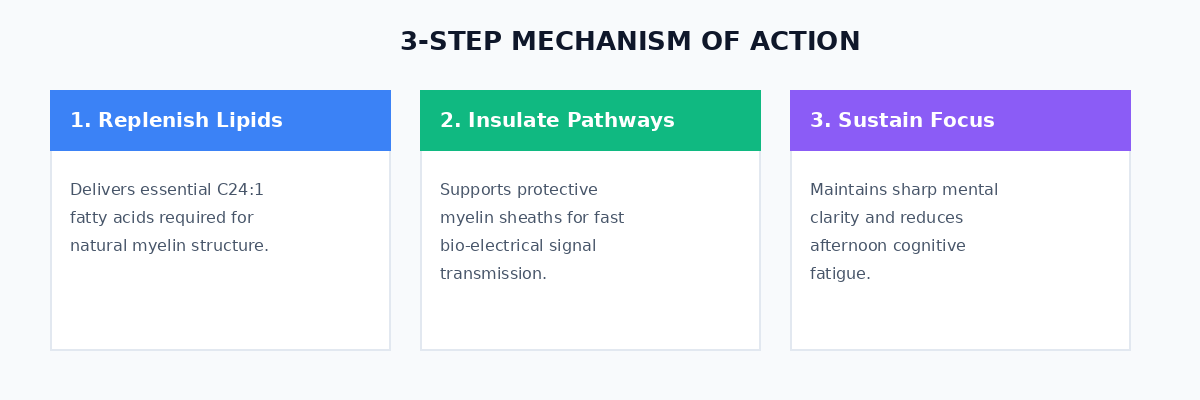
The brain is rich in lipids. They form cell membranes and are important components of myelin, the layered structure surrounding many nerve fibers. Myelin is often compared with electrical insulation because it helps nerve signals travel efficiently.


The biological pathway explains the research interest; it does not prove that an oral supplement changes cognition or treats a condition.
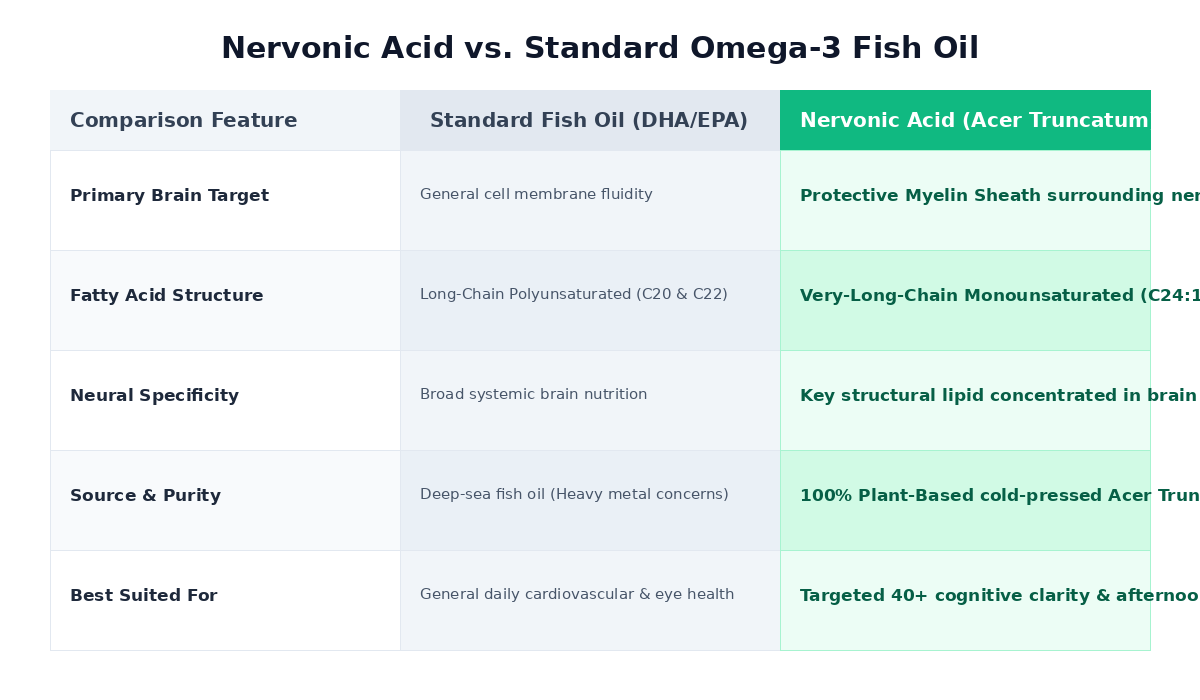
Nervonic acid is a very-long-chain monounsaturated fatty acid, chemically known as cis-15-tetracosenoic acid. It occurs naturally in certain sphingolipids found in nervous tissue and has therefore attracted interest in lipid and nutrition research.
Basic research examines its chemistry, metabolism, and biological functions. The effects of oral supplementation on a person’s focus, memory, or health are separate questions that require appropriate human evidence.
Nervonic acid is a natural component of relevant lipids and one of the fatty acids often discussed in research on brain lipids and myelin.

Compare the actual fatty acid spectrum and corresponding data, rather than considering all 'brain health oils' as the same component.
Don't Pay for Temporary Caffeine Boosts - You Need Verified Myelin Lipid Repair
Most brain health products on the market rely on cheap stimulants that give you a two-hour heart rate increase, followed by a more severe crash. When certain companies claim 'scientific research,' they often hide behind low-dose ingredients and marketing hype.
We refuse to make empty promises. Fatty acids are being researched because they are the building blocks of brain white matter. What really changes your daily brain state, however, is not vague lab studies, but whether you consume high-quality Meta T-Booster oil with a 6.17% C24:1 purity level.
Replace marketing buzzwords with verified ingredient concentrations and transparent batch testing.
The references above are used to explain the chemical composition and research background of the ingredients, and do not represent that the current product has produced specific health results.
Work, teams, children, parents, mortgages, competition, and AI all arrive at once. We still expect our brains to perform as they did in our twenties — often while carrying more responsibility than ever.
I was no longer asking only, “How alert do I feel today?” I was asking what I wanted my life — and my parents’ lives — to look like five or ten years from now.
After 40, the concern shifts from getting through today to building a sustainable long-term routine for oneself and one’s parents.
Before looking at a product, define the questions that its label and documents must answer.
Ask a Nervonic Acid Advisor on WhatsAppIt is a very-long-chain monounsaturated fatty acid, C24:1, found in certain complex lipids associated with nervous tissue.
No. Fish oil is usually discussed in relation to EPA and DHA. Acer truncatum seed oil has a different fatty-acid profile that can include nervonic acid.
Myelin is a lipid-rich structure around many nerve fibers. Nervonic acid appears in research on related complex lipids, which is why the terms are often discussed together.
Ask about the full ingredient list, serving amount, warnings, manufacturer, fatty-acid profile, what the listed 6.17% content refers to, and how it relates to the product being discussed.
Understanding the ingredient first makes the later product conversation more concrete.
Still have a question? Ask the advisor
The product information on this page indicates a neuroacid content of 6.17%. For specific details on this number, product labeling, and its correspondence to the current consulting product, please consult with a Neuroacid Advisor via WhatsApp.
A product only truly has value when its ingredients, ingredients, usage instructions, and component information can be verified.
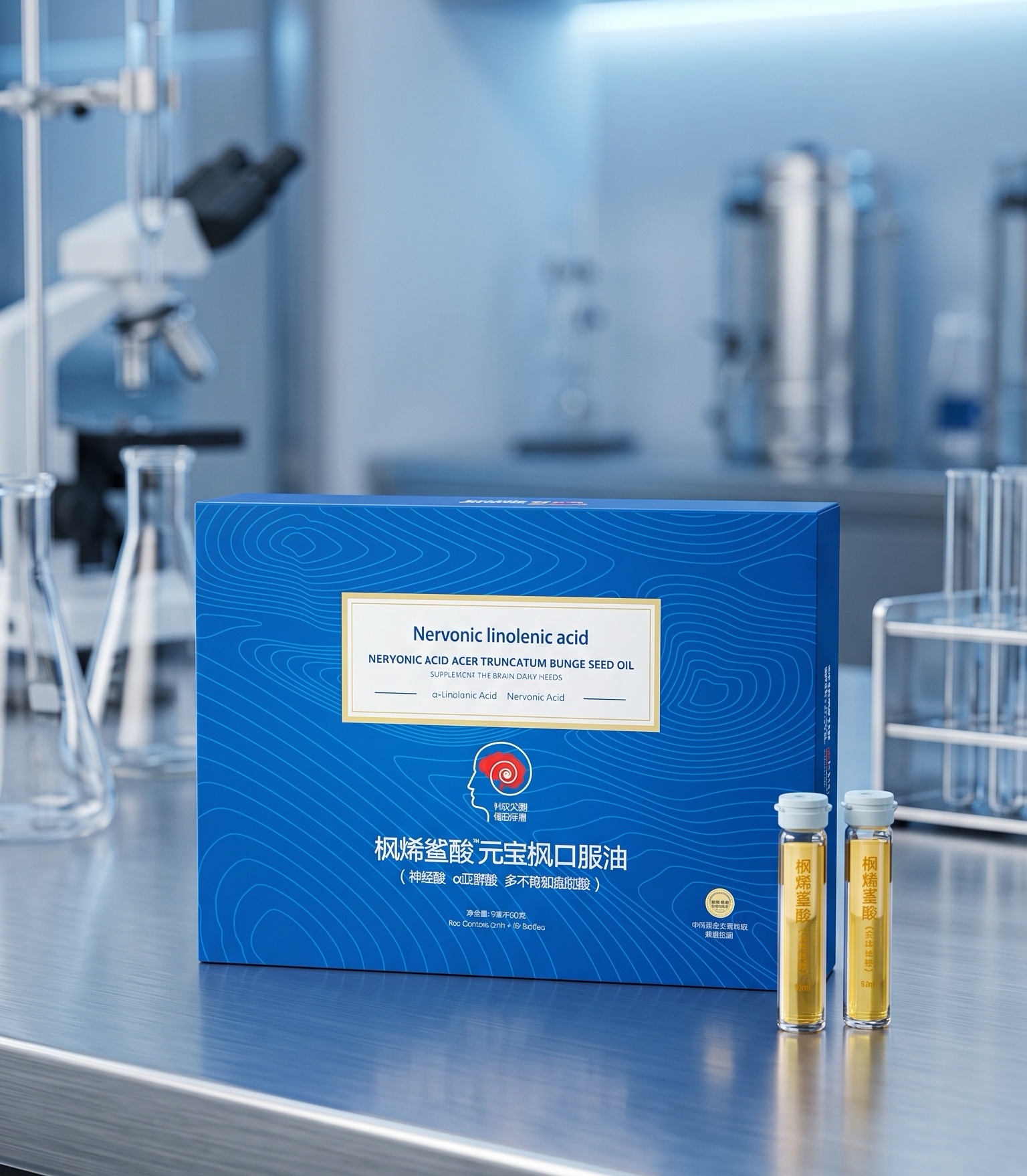
WhatsApp understands 6.17% concentration detailsA supplement only becomes part of real life if the format, label, and routine make sense. For an individual liquid-oil vial, the first conversation is usually practical rather than dramatic.
A useful routine starts with the official directions and consistent use — not with guessing a dose or expecting an overnight result.

A valuable WhatsApp consultation should be more like a question-and-answer based on data, rather than a sales call. You decide what you want to ask, and the consultant explains the existing data, and whether to continue is up to you to decide.
You can ask about the composition, the 6.17% content of the label, the usage instructions, warnings, storage methods, and how the existing data corresponds to the product you are consulting about.
Communication can be kept specific: ask for existing third-party COA, complete labels, fatty acid information, and written terms applicable to the current service.
A professional advisor should clearly answer your questions, distinguish between product information and medical advice, and give you time to compare information, rather than rushing you to make a purchase.
“I was hesitant to click on WhatsApp at first because I dislike sales pitches. But the advisor just sent me a third-party test report and answered my questions about dosage, without any high-pressure sales. This transparency convinced me.”
This scenario is used to simulate the expected consultation experience and is not displayed as a verified user review.
What changed the way I thought about brain health wasn’t a dramatic diagnosis. It was one small moment at a workbench — followed by a blank screen in my own office the next day.
If you have reached this point, you may be left with the same questions I had: What exactly is it? How is it different from DHA? What does 6.17% mean? And what should I ask before considering it for myself or a parent?

Return eligibility, delivery estimates, and packaging options can vary by destination. Ask the advisor for the current written terms that apply to your order.